Not every sign is struck in stone. Some are knotted at the waist each morning, drawn over the mouth at the fire, gathered in the hand at the altar. These are the symbols a Zoroastrian wears — the doctrine carried on the living body.
The Sudreh · the Sacred Shirt
A simple shirt of white cotton, sleeveless and seamed of nine pieces, worn next to the skin from the day of Sedreh-pūšī for the whole of life. At its throat is sewn a small pocket — the girēbān, the “purse of righteousness” — kept empty so the wearer may fill it, unseen, with good deeds.
The Kushti · the Sacred Cord
A hollow cord woven of seventy-two lambswool threads — one for each chapter of the Yasna — wound three times about the waist over the sudreh and fastened with four knots, two before and two behind. Its three coils are Good Thoughts, Words, and Deeds; its knot binds the wearer to Ahura Mazdā and against the Lie. Several times a day it is untied and retied with the Padyāb-Kušti, the prayer of renewal.
The Padān · the Mouth-Veil
The white cloth — also called the penōm — that the mōbed binds over nose and mouth when he tends the fire, lest a single breath or fleck of spittle fall upon the flame and defile it. Purity made into a garment: the priest may give the fire his care, but never his corruption.
The Barsom · the Sacred Bundle
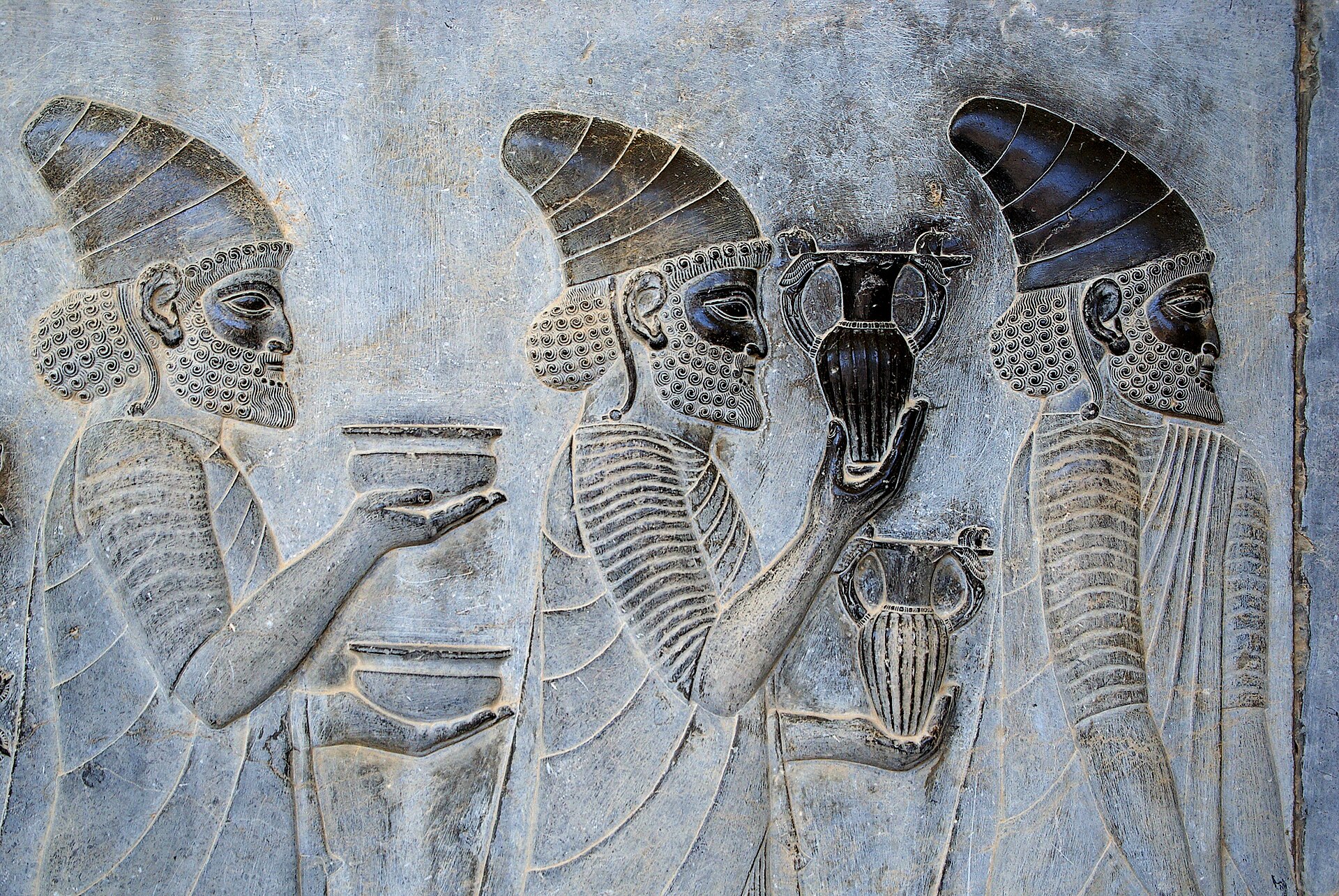
The bundle of slender rods — once tamarisk or pomegranate twigs, now fine metal wires — that the priest holds and ranges upon the altar through the Yasna. It is the whole plant kingdom gathered into the offering, the vegetable creation of Ameretāt standing witness to the rite.
The Afarganyu · the Fire-Vase
The footed vessel of bronze or silver in which the household and temple fire is enthroned, fed by hand with sandalwood and frankincense. Not an idol but a hearth: the visible seat of Ātar, the son of Ahura Mazdā, kept living from one generation to the next.