From the two Spirits before time, through the prophet, the empires, the long night of conquest and the scattering of the keepers, to the Renovation still to come. We count the years in three reckonings at once — for the fire is older than any one of them.
3764ZRE — Zarathushtrian Religious Era (from 1738 BCE)
1395Y.Z. — Yazdegerdi era (from 632 CE)
2026the common era (CE)
This is the present year, told three ways. Scroll, and the embers will light as you pass. Touch any ember to unfold its story.
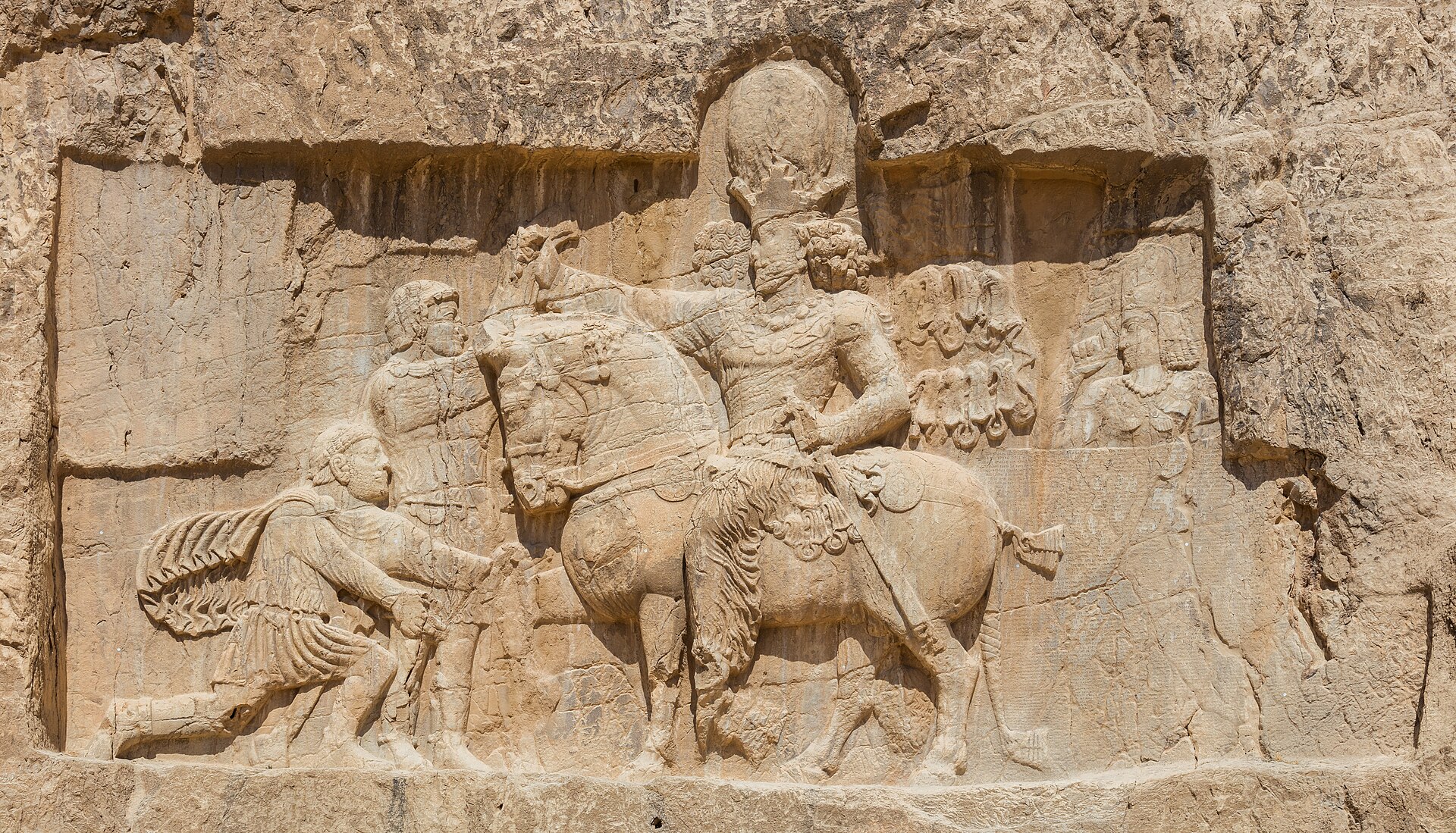
Naqš-e Rostam
Four kings sleep in this cliff in Fārs. Upon their tombs, the oldest dated confession of the faith — and below them, time keeps walking.
Xšaθra · The Shifting Dominion
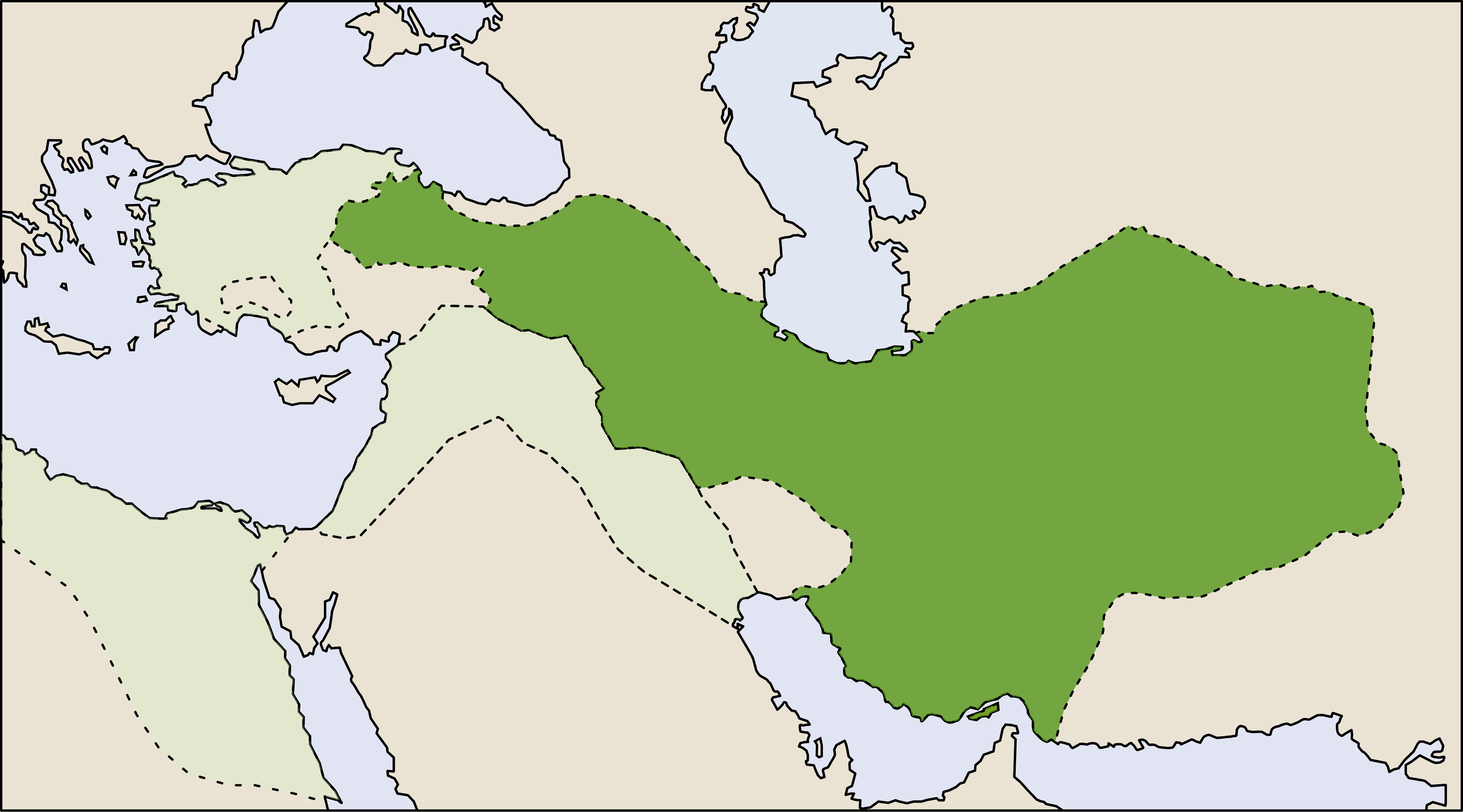
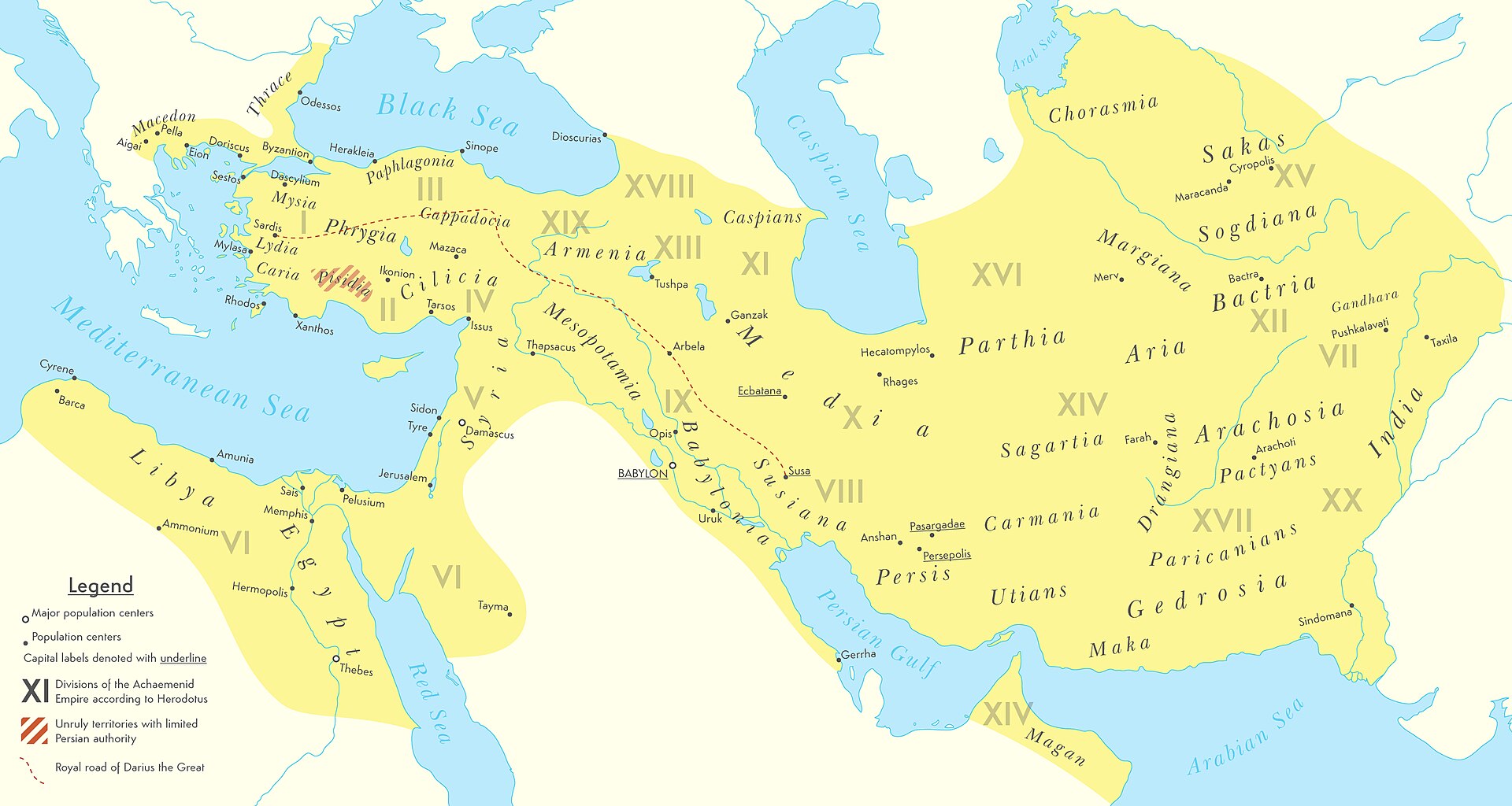
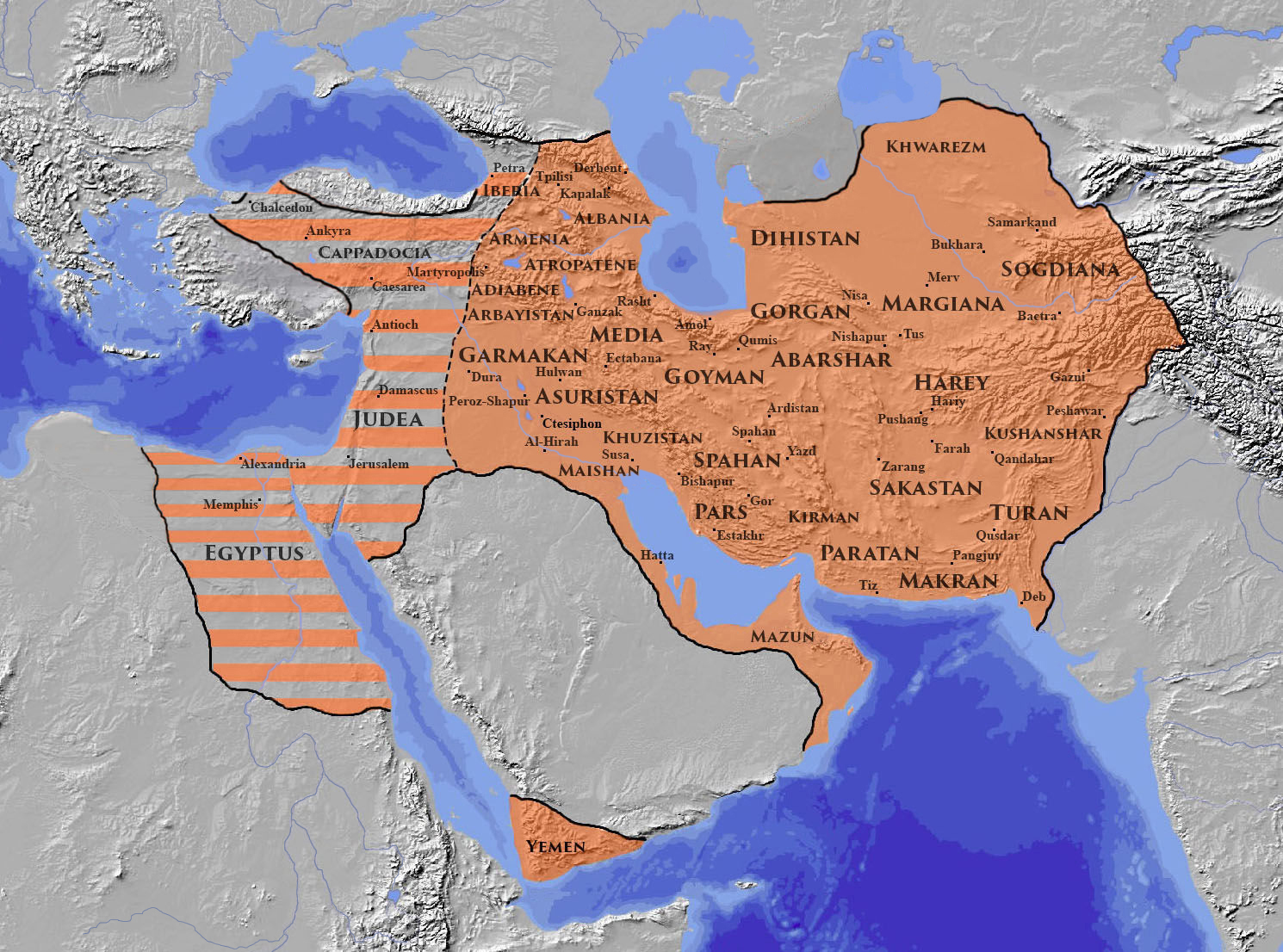
Three Maps of the Iranian Power
The fire kept no borders of its own, yet for twelve centuries it burned at the heart of empires. Watch the dominion move — from the highland of the Medes, outward across three continents under the Achaemenids, and home again to a Persia that made the faith its crown. The lands change hands; the flame is handed on.
The Medes, c. 600 BCE — the first Iranian crown. Under Cyaxares and Astyages their realm reached from Ecbatana toward the Halys, and among their tribes Herodotus counted the Magi, keepers of the fire and readers of the heavens. · Map by Crates, CC BY-SA 4.0, Wikimedia CommonsThe Achaemenids, c. 500 BCE — the dominion at its widest, from the Indus to the Aegean and the Nile. On the cliff of Behistun, Darius the Great gave the credit to Ahura Mazdā, “the greatest of the gods,” who made him king. · Map by Cattette, CC BY 4.0, Wikimedia CommonsThe Sasanians, c. 621 CE — the last great Zoroastrian empire, here at the high tide of Khosrow II, stretching once more from the Nile to the Oxus. In this realm the scattered Avesta was gathered and the throne-fires of the kingdom blazed. · Map by Keeby101, CC BY-SA 3.0, Wikimedia Commons
Čahār Tāj · The Four Crowns
The Dynasties That Tended the Fire
Four Iranian houses bore the diadem across the chronicle, and each stood in its own way before Ahura Mazdā — some as patrons, some as keepers, one as the faith made law. Their reigns are the spine of the years above.
The Medes · c. 678–550 BCE
The first crown of the Iranian peoples, raised at Ecbatana by Deioces and Cyaxares. Among the six Median tribes Herodotus names the Magi — the hereditary priesthood whose name still rides in every “magic” we speak. Here the reverence of fire and the rites of the old religion take their earliest political shelter, the seedbed from which the empires would grow.
The Achaemenids · 550–330 BCE
Cyrus the Great folded Media into a world-empire; Darius and Xerxes inscribed Auramazdā across their monuments from Behistun to Persepolis, swearing by the Wise Lord and the cosmic order of arta. Tolerant of every people's gods, they let the faith breathe across three continents — until Alexander's torch took Persepolis and scattered, by later memory, the first written Avesta.
The Arsacids · 247 BCE–224 CE
The Parthian horse-lords held the long middle age, guarding Iran against Rome. Theirs was an age of revival: the Dēnkard remembers a King Valaxš who ordered the dispersed verses of the Avesta — those preserved in memory and those committed to writing — to be sought out and gathered, lest the prophet's word be lost in the centuries of foreign rule.
The Sasanians · 224–651 CE
Ardashir I raised the last great Persian throne and made the faith the law of the realm. The high priests Tansar and Kerdīr set the orthodoxy; under Shāpūr II and Khosrow I the Avesta was edited, given its own alphabet, and crowned with the great fires of Ādur-Gušnasp, Ādur-Farnbāg and Ādur-Burzēn-Mihr. Here the chronicle of the empires closes — and the keepers turn east, carrying the flame into exile.
Gāh · The Sacred Calendar
The Wheel of the Year
Every day of the Zoroastrian month bears the name of a divinity, and every month is dedicated to one. Where day-name meets month-name, the calendar itself commands a feast — a jashan. The wheel below turns to set today at its crown: twelve months on the rim, the thirty day-divinities within, the five Gatha days at the year's hinge. Touch any cell to read its dedication.
The Order keeps the Fasli — the seasonal reckoning — in which 1 Farvardin falls on the spring equinox, 21 March, and the five Gatha days close the year before it. Shahanshahi and Qadimi communities keep the same names but begin the year in high summer, their calendars having drifted from the seasons across the centuries of exile. The names are one; only the counting differs.
A note on the years: scholars debate the prophet’s date across five centuries, and no reckoning is beyond dispute. The Order keeps 1738 BCE as its symbolic Year One — the date long honoured in the community as the dawn of the faith — while the priesthood still counts liturgical years from Yazdegerd III in 632 CE. We give all three, and let the fire be the judge of time.